Minimize Maladaptive Motor Habits
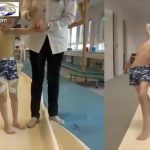
Whatever you do, your body will learn to do better. If you are walking badly, your body will learn how to do badly better. Over a long period of time I have asked parents why they go to physical therapy. In one form or another the answer is nearly always “So that he/she can walk normally.” Here are some facts. [...]
Ready for School? Provide Film to Teachers
Parents and therapists can help a child with a disability get off to a great start to the new school year by getting out their cameras or smart phones and “catching them doing it right”. First impressions are important in every business and social interaction. This truth also applies to the early interactions of a child with their teachers or [...]
Catch them doing it right – A Parent’s Perspective
My 7 year old daughter, who has athetoid cerebral palsy, has a lot of extra movements. It used to be that if she was sitting in a chair, she would hop around so much that her chair would be moving across the room. It is not safe and it is counterproductive if she wants to do anything while sitting. We [...]
Setting and Achieving Goals – A Family Perspective
Doctors and therapists in clinical practice set goals all of the time. However, anyone who has been in practice for a while realizes that there is often a gap between these goals and what is actually accomplished. Family centered therapy is also a popular concept. What is not widely appreciated is how much work is involved in creating family centered [...]
Challenge the Brain to Change the Habit
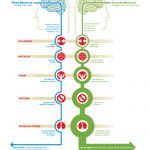
The abnormal gait of a child with cerebral palsy is the gait that has been hard wired into the child’s brain by use. In Psych 101 at McGill University, D.O. Hebb taught me that “Neurons that fire together, wire together”. The child’s gait may look abnormal to us, but it feels normal to the child. It has become the child’s [...]
What is the Diagnosis?
Christine was born with choreoathetosis, a particularly disabling form of cerebral palsy. Christine, as an adult, has developed a wicked forehand volley. This is one of the most difficult strokes in the game of tennis. Many of her ground strokes are picture perfect. What then is her diagnosis? She has all the signs and symptoms of choreoathetosis during a routine [...]
Moving from Deep Water Jogging to Land
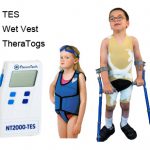
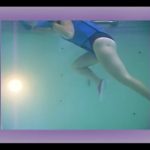
In previous posts, I have discussed deep water jogging as a simple approach to achieving a gravity free environment for gait training. This type of water exercise can be done as a family activity that allows even a child with a major degree of impairment to participate and have fun. (Independence for My Daughter) It may take 2 to 3 [...]
Water Exercise Results in an Adult with Cerebral Palsy
Christine Rouse is an accomplished young woman who has a type of cerebral palsy called choreoathetosis. All four limbs are involved with uncontrolled movements that affect her ability in all areas. Her speech has been a challenge, particularly as she is highly intelligent and interested in communicating with people. She was diagnosed at an early age and had years of [...]
Moving Freely
“If you can dream it, you can do it.” – Walt Disney, 1901-1966 The last two posts from the mother of a child and an adult, both with a movement disorder, stated that water exercise with a floatation device gave them freedom of movement. For the child, this meant that she could move independently, without adult help and support. [...]
An Adult with Cerebral Palsy
Christine is an adult with choreoathetosis, a type of cerebral palsy that affects both speech and all four limbs. Christine is the Founder and Executive Director of “Acting Without Boundaries” (AWB). She also serves as the Executive Director of “Kids are Kids”, an educational disabled awareness workshop that she created in 1991. ( www.christinerouse.com) This is her post about the [...]
Independence for My Daughter
From time to time, I will ask people who have direct experience with these programs to send in their own blog post. Here is the first. – Karen Pape
Deep Water Jogging for Gait Training
Children with an early neurological problem learn their first movements with a damaged nervous system. Baby brains do recover, but it takes time. It is difficult to study the process of brain recovery in a baby because their brains are also very immature. A newborn uses less than 10% of their adult brain. By age 3 years, the amount of [...]